2026-06-04
·3 min read
Why Engineering Teams Are Switching to AI Code Review
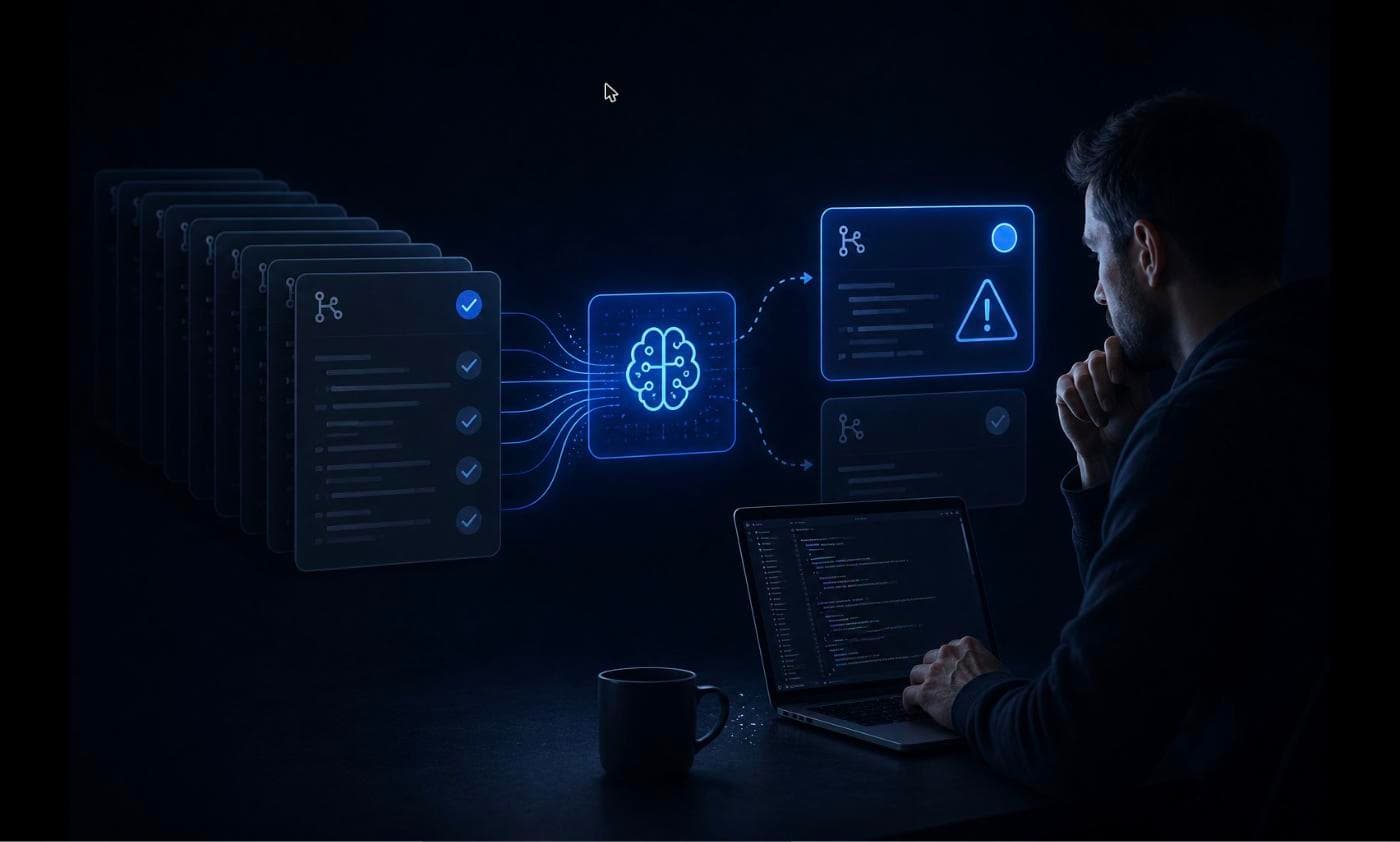
Most engineering teams have the same problem with code review. There are never quite enough senior engineers to do it well, PRs sit in a queue, and the quality of feedback depends on who picks one up and when. That queue is not anecdote: research cited in Google's published study of modern code review put median time-to-approval at roughly 15 to 20 hours at Microsoft, AMD and Chrome OS. Nobody designed it this way. It is just where you land when the team grows faster than the review process.
AI code review does not fix the root cause. It does take a big chunk off the top. A well-configured reviewer makes the first pass on every PR, straight away:
- The conventions your team agreed on but nobody has time to check every time
- The recurring bugs that keep turning up in retros
- The obvious stuff that should never have reached a human reviewer
That hands your senior engineers back the review that actually needs their judgement.
What it actually does
A reviewer that is set up well:
- Catches correctness issues before a human opens the PR
- Holds the line on the naming and structural rules your team agreed on
- Flags security problems every time, not just when the right person happens to pick up the PR
- Gives junior engineers specific feedback in minutes instead of a two-day wait
What it does not replace: the senior engineer who knows the architecture, remembers why a call was made six months ago, or spots when something works but will be miserable to maintain. Microsoft Research's study of code review found the same thing from the other side: much of review's value is knowledge transfer and team awareness, not defect-finding. That part stays a people job.
Picture it. The reviewer catches a missing null check on a third-party API response at 11pm on a Friday, before anyone has looked. What it does not know is that the same API has been flaky for months and the team is quietly planning to rip it out. That call still needs a person.
Configuration is what makes it work
The difference between a reviewer people rely on and one they mute after a week is configuration. A reviewer tuned for a TypeScript monorepo looks nothing like one set up for a Go microservices platform. A team that has been burned by one specific class of production bug wants it caught on every PR, not buried under generic style nits.
Getting there takes some upfront work and a bit of iteration as the codebase moves. Once it is dialled in, the payoff is consistency. The same first-pass review at 9am on a Monday and 11pm on a Friday.
What changes in practice
- Senior engineers get their time back from first-pass review
- Junior engineers get faster, sharper feedback and improve quicker
- PRs move faster, because the first round of feedback is already there
- New starters get immediate guidance on how the codebase works, instead of waiting for someone to free up
It does not land in a day. But the setup is lighter than most teams expect, and the return shows up fast.
If you want to try this with your team, book a call. We will ask about your stack, your current review setup, and where the friction is. We take it from there.
Book a conversation →